Packaging and general film
Eight-piston rings are the standard build for packaging film and general film slitting.
Pneumatic Differential Winding Shaft
Air slip shafts use pneumatic core locking and controlled differential slip to support stable torque transmission, core holding and multi-roll winding quality in slitting and rewinding applications. Also known as: air slip shaft, pneumatic differential shaft.
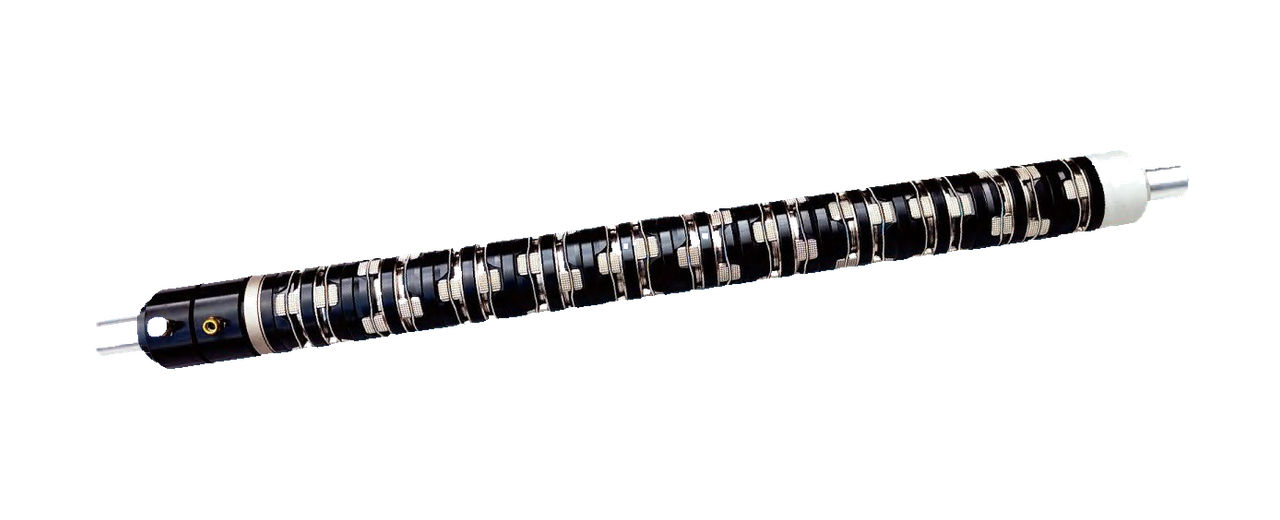
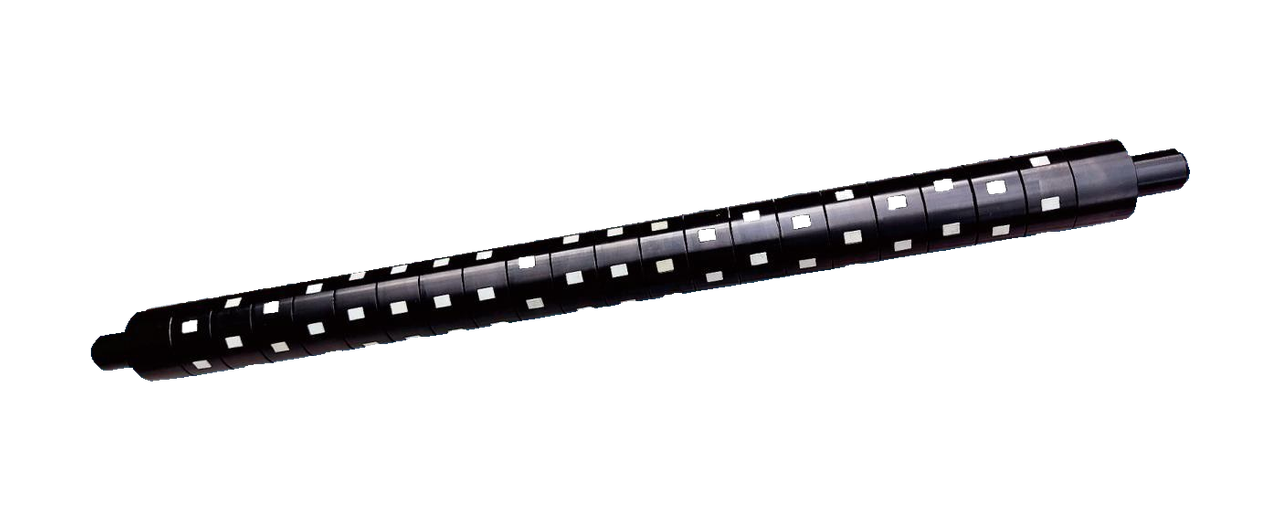
Shaft Structure & Winding Function
Suitable for PET film, electronic film, packaging film and lithium battery-related separator, electrode, copper foil or aluminum foil slitting applications where suitable.
| Core Size | 3-inch standard core, 76.2 +/- 0.2 mm |
|---|---|
| Ring OD | 75.5 mm body OD, up to 77.9 mm expansion point |
| Ring Widths | 19, 20, 25, 30, 35, 40, 45, 50, 60 mm depending on version |
| Expansion Piece | Metal expansion piece or rubber expansion piece |
| Control Options | Single air path, dual air path, dual-link dual air path and ultra-low-tension versions |
Eight-piston rings are the standard build for packaging film and general film slitting.
Twelve-piston rings are specified for electrode and separator slitting, where torque consistency across many narrow rolls decides the yield.
Sixteen-piston rings are for copper and aluminum foil on power battery lines, including dual-air-path rings for 12–17 mm foil widths.
Pneumatic locking holds the core through forward and reverse rotation, so the core does not shift or loosen on automatic handling systems.
Slip Ring
Different slip ring structures can be selected according to core size, ring width, air path, expansion piece and winding tension requirement.
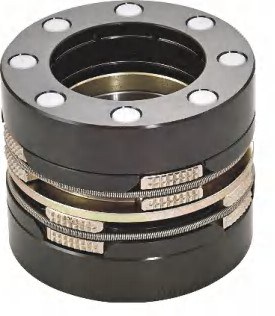
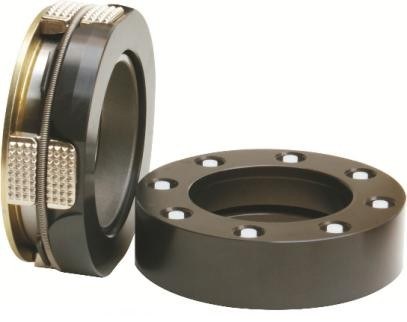
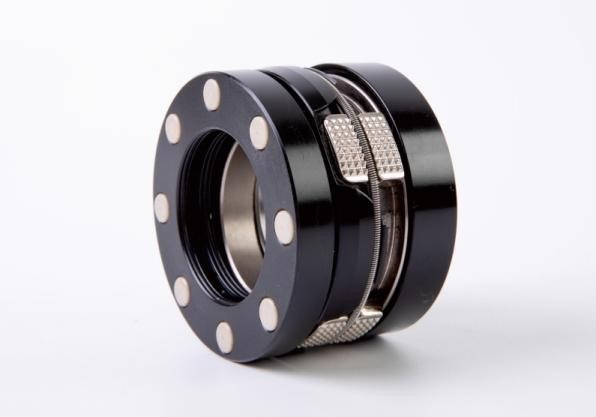
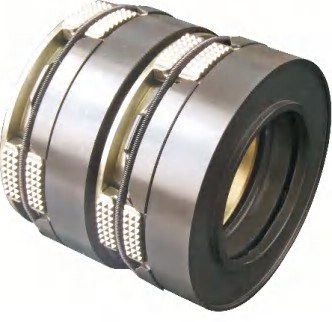
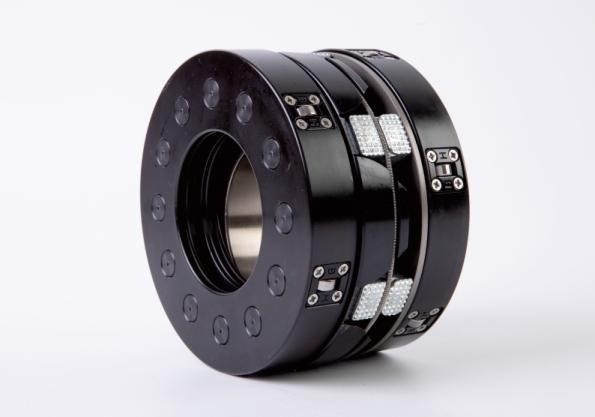
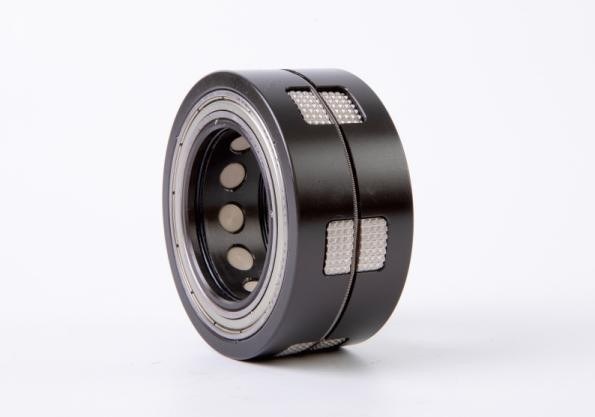
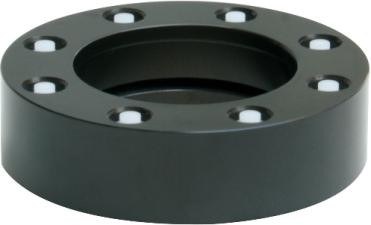
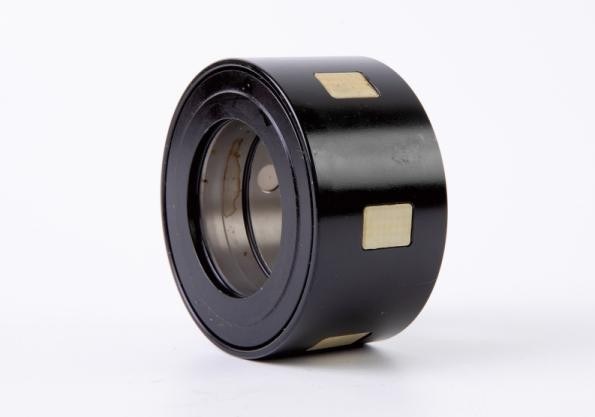
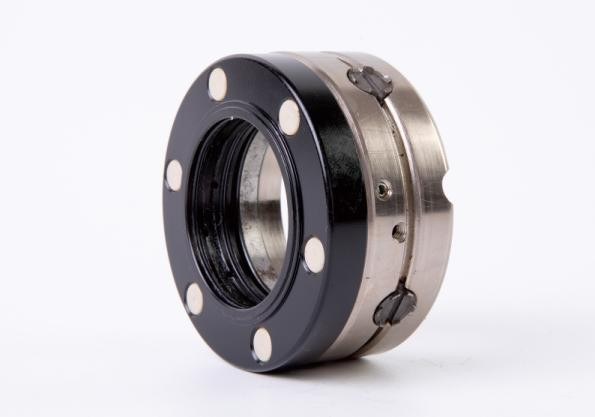
Confirm core material, core inner diameter, required width, winding tension range, shaft structure and whether the application needs low starting tension or higher roll-holding force.
Technical Reference Data
Reference values should be confirmed according to the actual shaft structure, ring width, groove material and air path before final selection.
Note on this data: the two tables below are measured on key-type slip rings, as published in the manufacturer's technical document. They show how pull force tracks air pressure on a dual-air-path ring and are useful as a reference for that relationship, but they are not a substitute for air-ring figures. Ask us for the pull force data for the specific ring width, piston count and friction material you are considering before you size a shaft.
Pressures are given in kg/cm² as published by the manufacturer. For conversion: 1 kg/cm² = 0.98 bar = 14.2 psi. So 1 kg/cm² ≈ 1 bar, and 5 kg/cm² ≈ 4.9 bar ≈ 71 psi.
How to use these figures: they are reference values for a single ring, measured under the stated test conditions — that ring width, that friction material and that groove. Total winding torque on your machine depends on how many rings are on the shaft, the roll diameter as it builds, the condition of the friction material and the line speed, so these numbers cannot be used directly to calculate web tension. Send us the slit widths, the number of rolls across and the tension range you need, and we will confirm the ring configuration before you size anything.
Test condition: four 8 mm pistons, 40 mm wide dual-air-path key-type slip ring.
| Air Pressure (kg/cm2) | 0.2 | 0.4 | 0.6 | 0.8 | 1 | 1.2 | 1.4 | 1.6 | 1.8 | 2 | 2.2 | 2.4 | 2.6 | 2.8 |
|---|---|---|---|---|---|---|---|---|---|---|---|---|---|---|
| Pull Force (N) | 1.9 | 2.1 | 2.4 | 2.6 | 2.8 | 3.1 | 3.5 | 3.8 | 4.2 | 4.6 | 4.9 | 5.2 | 5.6 | 6.1 |
| Air Pressure (kg/cm2) | 3 | 3.2 | 3.4 | 3.6 | 3.8 | 4 | 4.2 | 4.4 | 4.6 | 4.8 | 5 | |||
| Pull Force (N) | 6.3 | 6.8 | 7.3 | 7.6 | 8.0 | 8.3 | 8.5 | 8.7 | 9.0 | 9.3 | 9.5 |
Test condition: four 8 mm pistons, 25 mm wide dual-key slip ring.
| Air Pressure (kg/cm2) | 0 | 0.5 | 1 | 1.5 | 2 | 2.5 | 3 | 3.5 | 4 | 4.5 | 5 | 5.5 | 6 | 6.4 |
|---|---|---|---|---|---|---|---|---|---|---|---|---|---|---|
| Pull Force (N) | 0.2 | 0.7 | 1.5 | 2.1 | 2.5 | 3.2 | 3.6 | 4.1 | 4.6 | 5.0 | 5.4 | 5.7 | 6.2 | 7.6 |
Low tension slip shafts are designed for sensitive materials that require stable winding at low air pressure and low torque.
View DetailsDS slip shafts provide pneumatic locking and controlled slip for medium-tension film slitting and rewinding applications.
View DetailsBall slip shafts can be configured as center-air, pneumatic side-pressure or mechanical side-pressure structures for flexible narrow-roll winding.
View DetailsDouble ball and roller slip shafts use extended expansion contact points to support stable core holding and winding torque.
View DetailsKey slip shafts use rectangular metal or rubber keys to expand and contact the core for controlled differential winding.
View Details