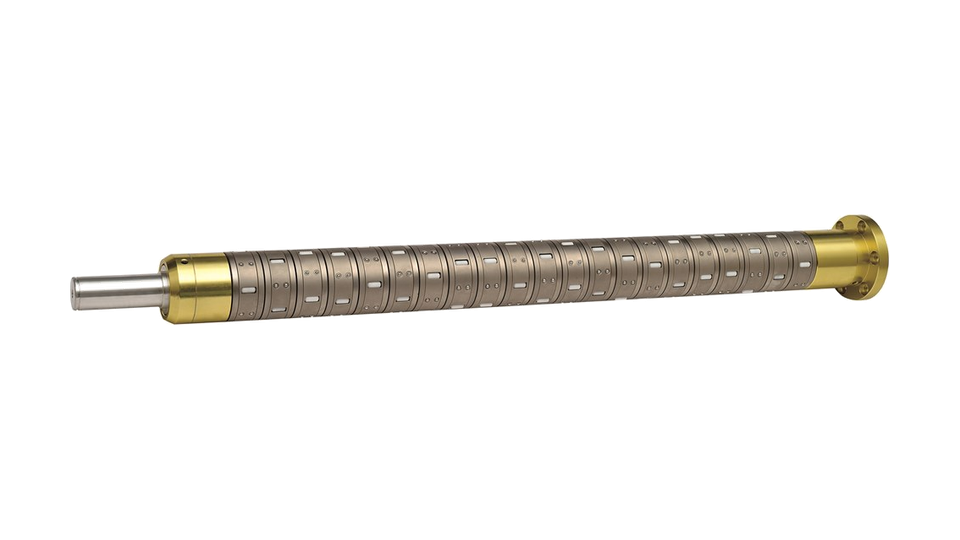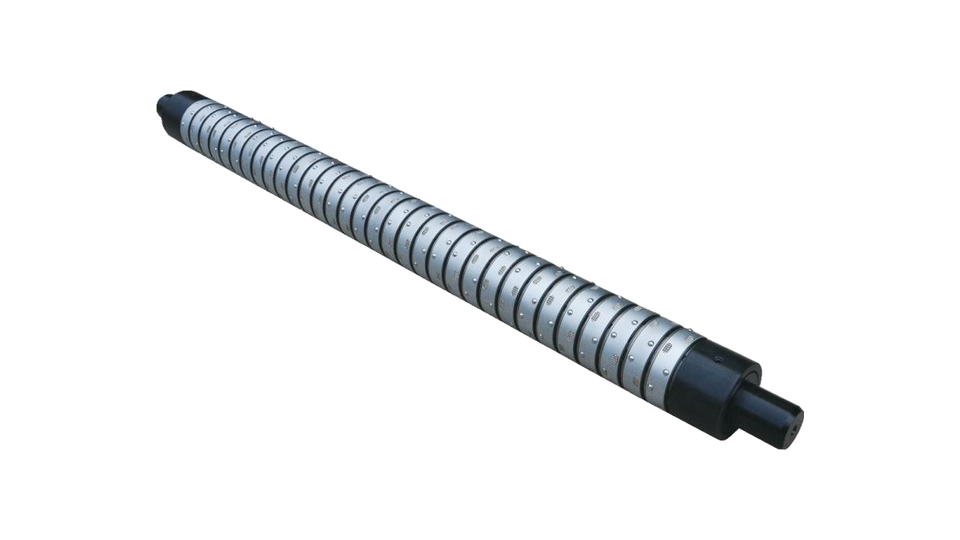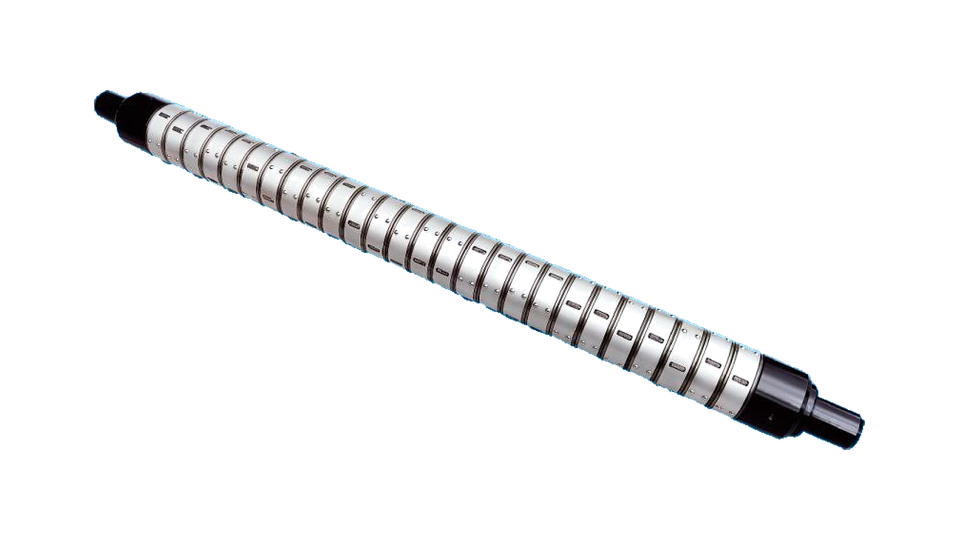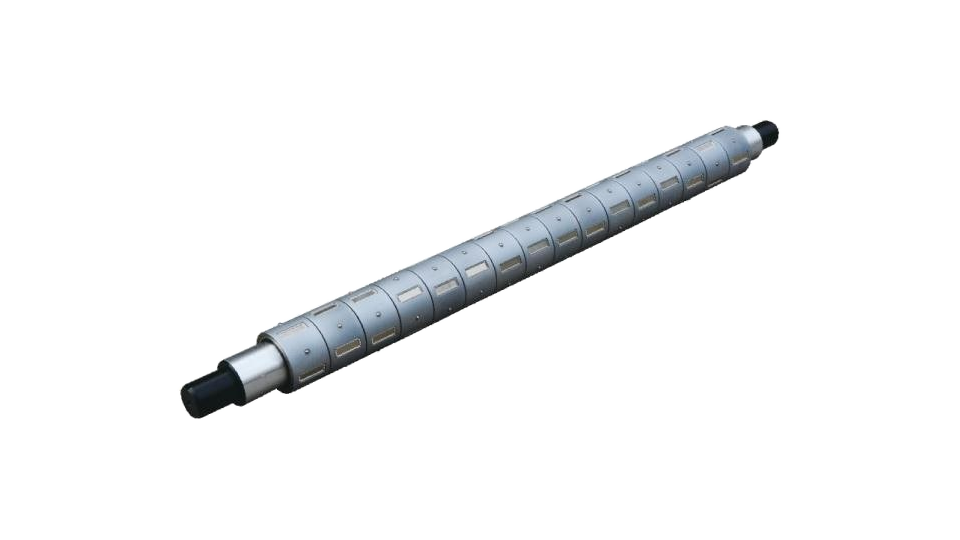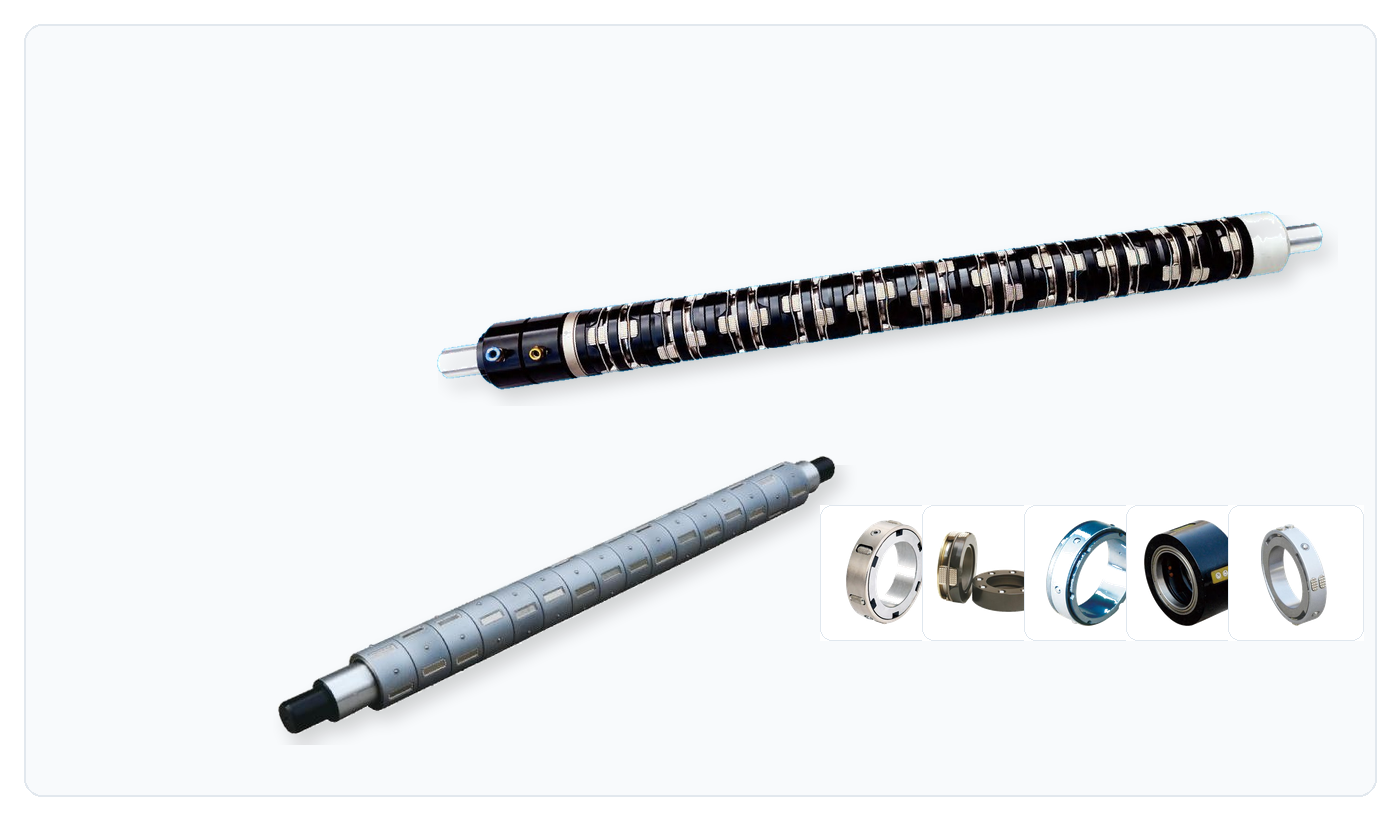
Differential Rewind Shafts and Friction Rings

Slip shafts, slip rings and friction elements for slitting, rewinding and multi-roll winding applications.

KENDORIC supplies multiple slip shaft structures for slitting and rewinding lines where finished rolls require controlled torque, stable core contact and balanced winding quality.

Slip shaft and slip ring differential winding components

How Slip Shafts Work

Independent slip control for differential winding.

Slip shafts allow each finished roll to slip independently during rewinding. This helps compensate for small differences in finished roll diameter after slitting and keeps each roll under more consistent winding torque.

  • Differential winding for multiple rolls
  • Torque compensation between finished rolls
  • Stable core contact
  • Improved finished roll quality

Which slip shaft is on your machine?

Use the core-contact structure as a starting point, then confirm it with a photograph of the old ring and shaft. The outside diameter alone does not distinguish rings intended for the same core size. On pneumatic designs, the air path and internal dimensions complete the identification.

Ball contact: start with the ball-ring options

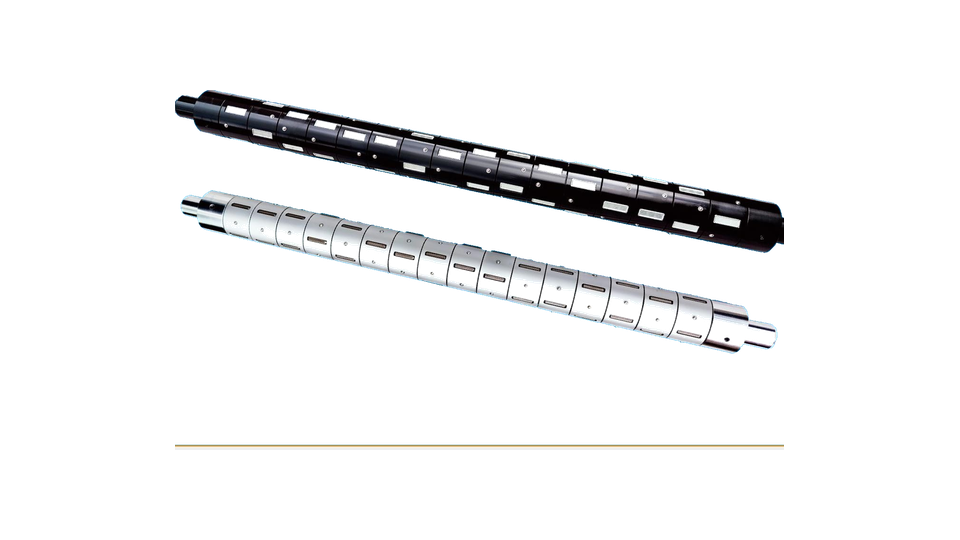
If the core contact uses steel balls, check whether the installed ring is single-ball or double-ball. The ball family also distinguishes centre-air, pneumatic side-pressure and mechanical side-pressure operation.

Identify ball slip rings
Extended cylindrical contact: check the roller structure

The double-ball and roller design uses extended cylindrical contact points. Compare that contact structure and the standard 60 mm bore or 55 mm bearing version, rather than identifying the ring from its outer diameter alone.

Compare roller contact rings

Rectangular keys: identify the key material

Rectangular metal keys or rubber keys identify the key-type contact arrangement. The friction material is a separate selection: kraft and wool felt give different pull-force curves.

See key and friction-material choices

Pistons and air paths: identify the pneumatic version

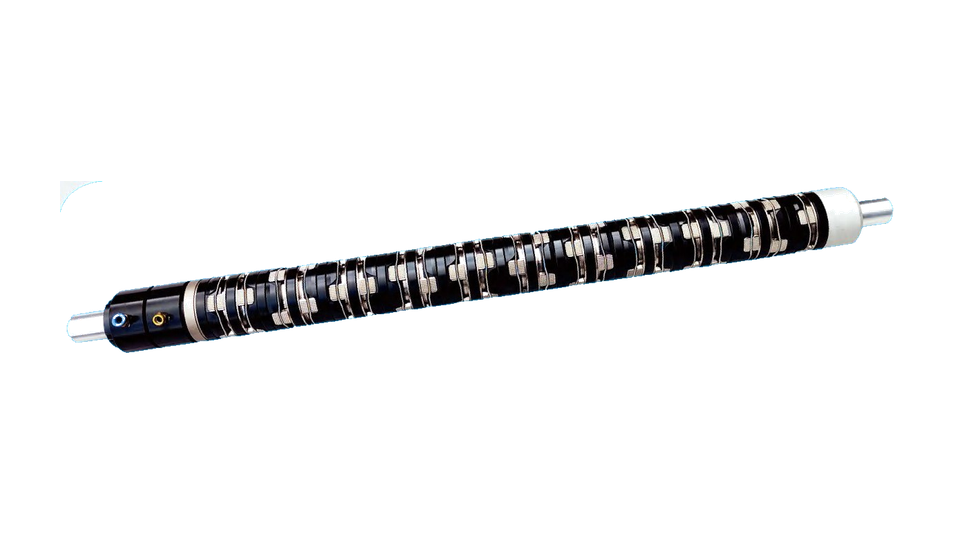
For an air shaft with piston or expansion-piece rings, count the pistons and confirm a single air path or dual-air-path XC arrangement. The existing ranges distinguish 8, 12 and 16 pistons by application.

Match air-operated rings

A centre-air shaft working at medium tension: check DS

DS uses pneumatic locking and slip, with a published starting pressure of at least 0.8 kg/cm². Match the 45 mm bore on its 3-inch version or the 70 mm bore on its 6-inch build.

Identify DS dimensions

A centre-air shaft starting at very low pressure

The low-tension structure combines roller positioning balls and bearings and works from 0.1 kg/cm². Confirm that structure and its 50 mm standard bore if the machine handles thin PET, electronic film or separator film.

Check the low-tension arrangement

Compare the published winding ranges

StructureMinimum slit widthStarting air pressureSuitable coresTypical web materials
Air / piston rings——3-inch; paper, plastic or composite coresPackaging film; lithium electrode and separator (12 pistons); battery copper/aluminium foil (16 pistons)
Ball ringsFrom 5 mm, subject to shaft/ring layout—3-inch or 6-inch paper coresFilm, paper and label stock
Double ball and roller——3-inch or 6-inch; rubber, aluminium or paper cores—
DS—≥0.8 kg/cm²3-inch or 6-inch; paper or plastic coresFlexible packaging laminates; medium-tension film
Key type——3-inch or 6-inch; rubber or aluminium cores—
Low tension—From 0.1 kg/cm²3-inch; rubber, aluminium or paper cores10 µm PET, electronic film and lithium separator

“—” means a minimum or material-specific value is not published on the corresponding model page. Ring width and minimum slit width are different measurements: the ball structure’s 5 mm figure depends on the shaft and ring layout, while the replacement itself must match the actual ring dimensions.

A 3-inch core is nominally 76.2 mm inside diameter and a 6-inch core 152.4 mm. Core material, ring bore, width and connection details still need checking even where two structures take the same nominal core size.

Replacement slip rings for an existing shaft

Slip rings can be supplied separately, including rings for shafts from other manufacturers when the dimensions match. Send an old-ring photograph and the shaft drawing so we can check the structure, ring bore and width, core inside diameter, keyway or air-hole positions, and quantity before quoting. Availability and lead time are confirmed with the quotation.

Select the closest structure for its measurement checklist:

The same part, four different names

If you are comparing quotations from several countries, these all describe the same product. We list them because the wording on a drawing or an enquiry rarely matches ours.

TermWhere you will see it
Differential rewind shaftThe most common term in European and American converting; usually refers to the complete shaft
Friction shaft / differential friction shaftUsed interchangeably with differential rewind shaft, emphasising how the torque is transmitted
Friction ring / differential friction ringThe individual rings that slip on the shaft body — what we call the slip ring below
Slip shaft / slip ringDirect translation of the Chinese and Japanese term; common in Asian catalogues, including ours

Slip Shaft Structures

Select the shaft and ring structure according to core size, finished roll width, material sensitivity, roll weight and required winding tension range.

Air Slip Shaft

Air Slip Shaft

Air slip shafts combine pneumatic core locking with controlled differential slip for accurate torque and stable multi-roll winding.

View Details
Low Tension Slip Shaft

Low Tension Slip Shaft

Low tension slip shafts are designed for sensitive materials that require stable winding at low air pressure and low torque.

View Details
DS Slip Shaft

DS Slip Shaft

DS slip shafts provide pneumatic locking and controlled slip for medium-tension film slitting and rewinding applications.

View Details
Ball Slip Shaft

Ball Slip Shaft

Ball slip shafts can be configured as center-air, pneumatic side-pressure or mechanical side-pressure structures for flexible narrow-roll winding.

View Details
Double Ball and Roller Slip Shaft

Double Ball and Roller Slip Shaft

Double ball and roller slip shafts use extended expansion contact points to support stable core holding and winding torque.

View Details
Key Slip Shaft

Key Slip Shaft

Key slip shafts use rectangular metal or rubber keys to expand and contact the core for controlled differential winding.

View Details

Application Fit

Built for slitting, rewinding and multi-roll winding.

Slip shafts help compensate for small roll diameter differences after slitting, so each finished roll can wind with a more controlled and consistent torque.

  • Film, paper, label stock, foil and composite webs.
  • Packaging film, PET film, electronic film and flexible packaging laminates.
  • Lithium battery-related separator, electrode, copper foil and aluminum foil slitting or rewinding applications where suitable.
Typical MachinesSlitting machines, rewinding machines and finishing lines
Core Sizes3-inch and 6-inch core IDs, with custom options depending on shaft and ring structure
Selection InputsCore ID, finished roll width, roll diameter, roll weight, material, line speed and target winding tension range
Available StructuresAir, low-tension, DS, ball, double-ball roller and key-type slip shaft structures

Need help choosing a slip shaft?

Send the core ID, finished roll width, roll diameter, roll weight, material and winding tension range. KENDORIC will help match the shaft and ring structure.

Request Selection Support

How to compare single-ring pull-force data

Pressures are given in kg/cm² as published by the manufacturer. For conversion: 1 kg/cm² = 0.98 bar = 14.2 psi. So 1 kg/cm² ≈ 1 bar, and 5 kg/cm² ≈ 4.9 bar ≈ 71 psi.

How to use these figures: they are reference values for a single ring, measured under the stated test conditions — that ring width, that friction material and that groove. Total winding torque on your machine depends on how many rings are on the shaft, the roll diameter as it builds, the condition of the friction material and the line speed, so these numbers cannot be used directly to calculate web tension. Send us the slit widths, the number of rolls across and the tension range you need, and we will confirm the ring configuration before you size anything.

Keep the test configuration attached to each set of values. A measured ring bore, width or friction material can differ from the standard replacement range. In particular, the air-shaft page identifies its displayed curves as key-type reference data; they are not measurements of every piston-ring variant.

Ask about differential rewind shafts

Tell us the core size, the material and the slit widths, and we will come back with a shaft and ring configuration.

Have a drawing of your shaft or a photo of the old rings? Send it on WhatsApp or to sales@kendoric.com — we check fit before quoting.

Send via WhatsApp