Medium-tension film slitting
The intended range. Below roughly 0.8 kg/cm² this shaft will not start, so it is not a low-tension solution.
Medium-Tension Pneumatic Slip Shaft
DS slip shafts provide pneumatic core locking and controlled slip for medium-tension film slitting and rewinding applications. Also known as: DS slip shaft, DS friction shaft.
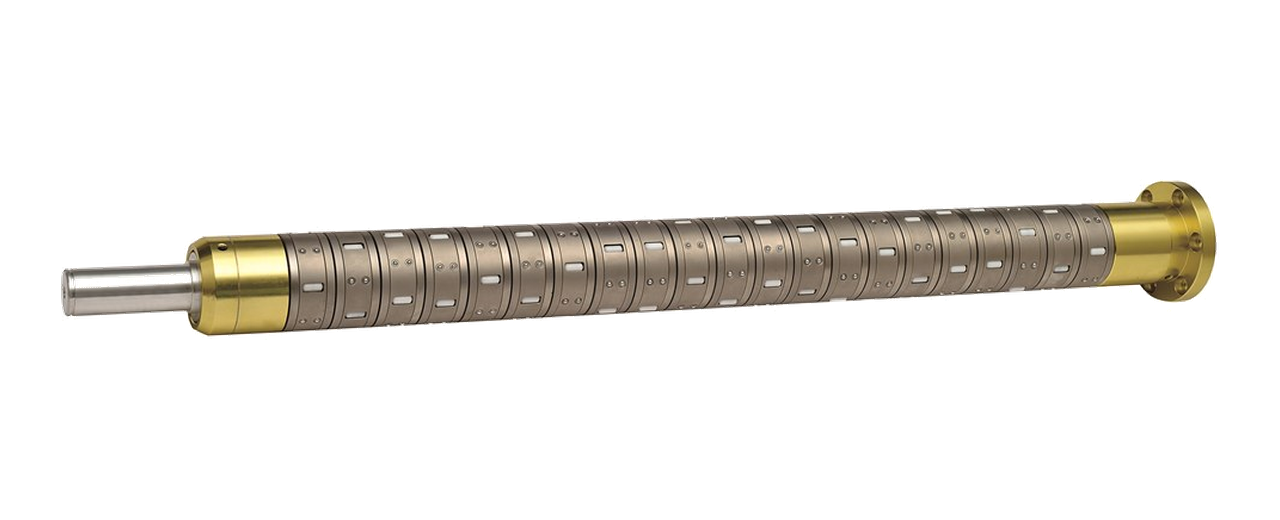
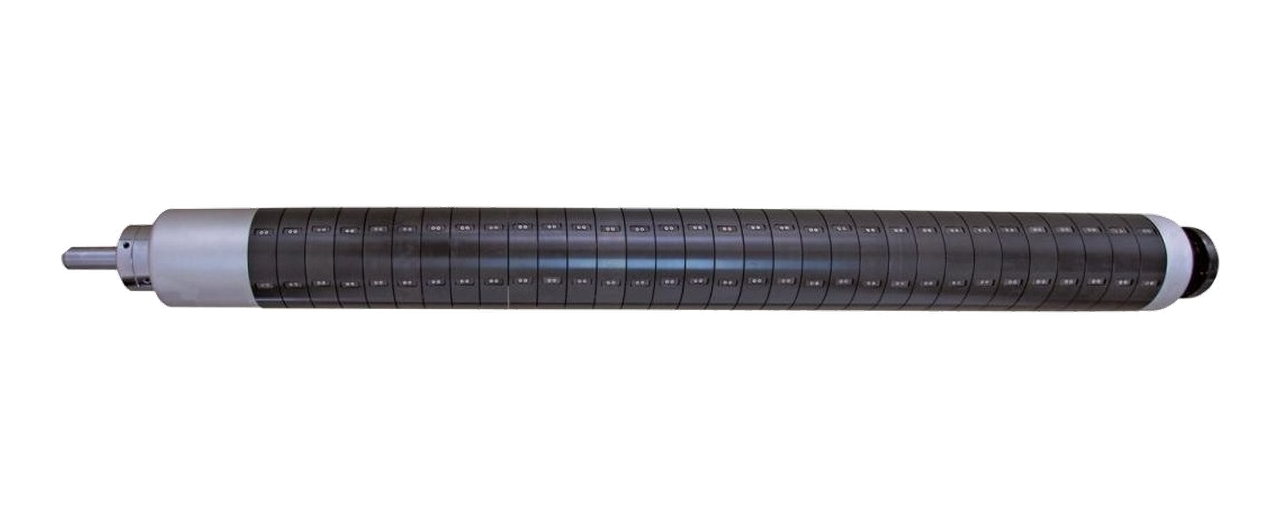
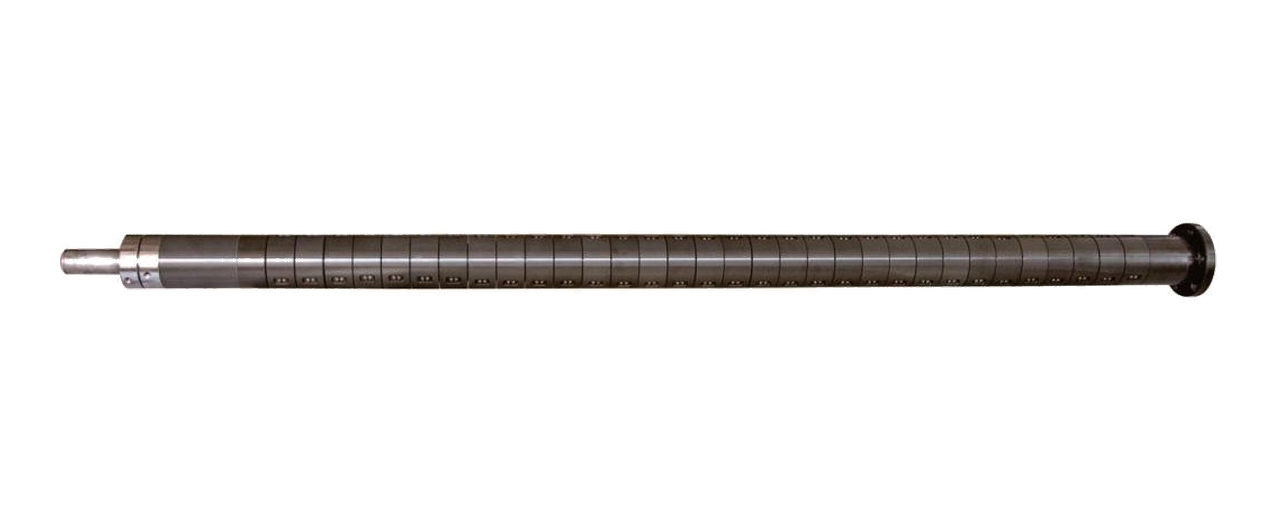
Shaft Structure & Winding Function
Suitable for automatic roll loading and unloading, medium-tension film slitting and flexible packaging laminate rewinding.
| 3-inch Ring | 75.5 mm OD, 77.8 mm expansion point, 45 mm ID |
|---|---|
| 6-inch Ring | 151 mm OD, 155.5 mm expansion point, 70 mm ID |
| Core Sizes | 76.2 +/- 0.2 mm and 152.4 +/- 0.2 mm |
| Widths | 40 mm standard; 30, 35 and 45 mm options for 3-inch |
| Starting Pressure | 0.8 kg/cm² (0.78 bar / 11.4 psi) minimum — this shaft cannot start at low tension |
The intended range. Below roughly 0.8 kg/cm² this shaft will not start, so it is not a low-tension solution.
Particularly suited to laminated soft packaging film according to the manufacturer.
The core stays put through forward and reverse rotation, which is what automatic load and unload systems need.
The 6-inch build (151 mm OD, 70 mm ID) is the common configuration for wider laminate lines.
Slip Ring
DS slip rings can be selected according to core size, ring width, air path, required torque and winding tension range.
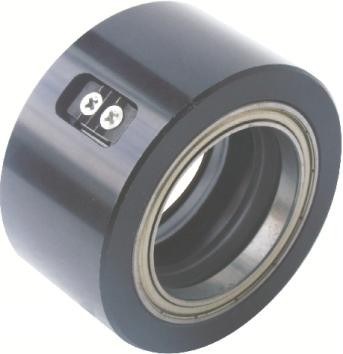
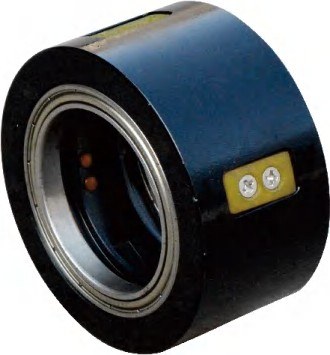
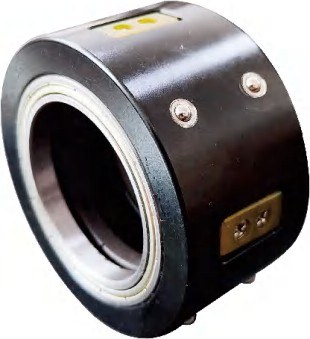
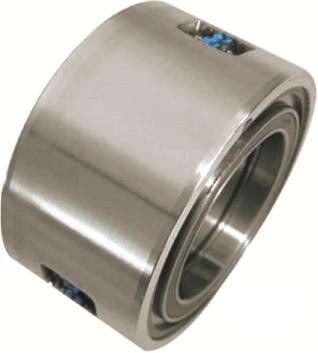
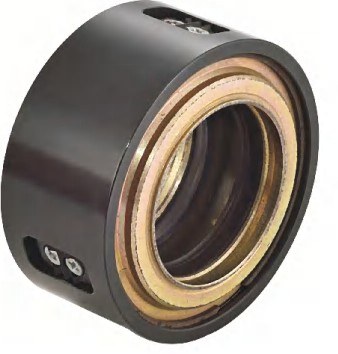
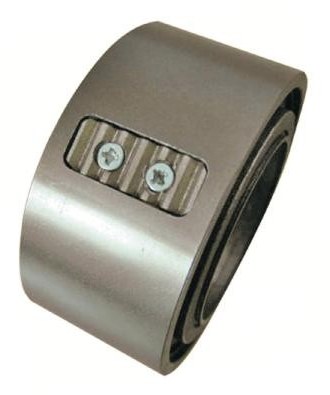
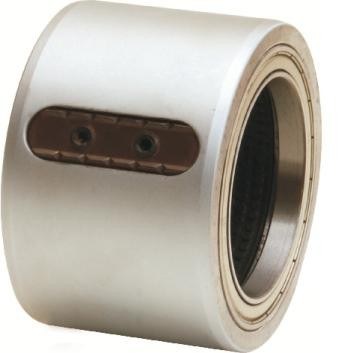
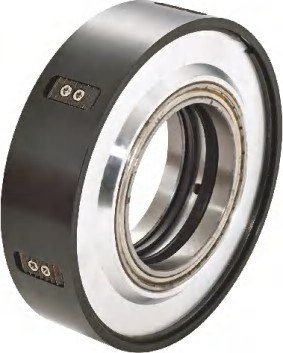
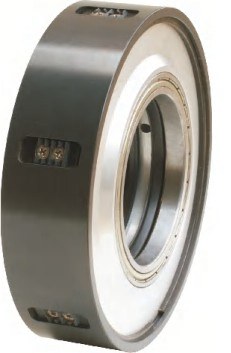
Confirm core material, core inner diameter, required width, winding tension range, shaft structure and whether the application needs low starting tension or higher roll-holding force.
Technical Reference Data
Reference values should be confirmed according to the actual shaft structure, ring width, core material and air path before final selection.
Pressures are given in kg/cm² as published by the manufacturer. For conversion: 1 kg/cm² = 0.98 bar = 14.2 psi. So 1 kg/cm² ≈ 1 bar, and 5 kg/cm² ≈ 4.9 bar ≈ 71 psi.
How to use these figures: they are reference values for a single ring, measured under the stated test conditions — that ring width, that friction material and that groove. Total winding torque on your machine depends on how many rings are on the shaft, the roll diameter as it builds, the condition of the friction material and the line speed, so these numbers cannot be used directly to calculate web tension. Send us the slit widths, the number of rolls across and the tension range you need, and we will confirm the ring configuration before you size anything.
Test condition: 6-inch DS slip ring, 40 mm width, 55 mm inner bore.
| Air Pressure (kg/cm2) | 0.4 | 0.6 | 0.8 | 1.0 | 1.2 | 1.4 | 1.6 | 1.8 | 2.0 | 2.2 | 2.4 | 2.6 |
|---|---|---|---|---|---|---|---|---|---|---|---|---|
| Pull Force (kg) | 0.39 | 0.46 | 0.54 | 0.62 | 0.76 | 0.94 | 1.10 | 1.20 | 1.24 | 1.38 | 1.47 | 1.50 |
Continuation of the 6-inch DS slip ring test.
| Air Pressure (kg/cm2) | 2.8 | 3.0 | 3.2 | 3.4 | 3.6 | 3.8 | 4.0 | 4.2 | 4.4 | 4.6 | 4.8 | 5.0 |
|---|---|---|---|---|---|---|---|---|---|---|---|---|
| Pull Force (kg) | 1.54 | 1.58 | 1.64 | 1.70 | 1.78 | 1.84 | 1.92 | 2.04 | 2.10 | 2.22 | 2.32 | 2.42 |
Air slip shafts combine pneumatic core locking with controlled differential slip for accurate torque and stable multi-roll winding.
View DetailsLow tension slip shafts are designed for sensitive materials that require stable winding at low air pressure and low torque.
View DetailsBall slip shafts can be configured as center-air, pneumatic side-pressure or mechanical side-pressure structures for flexible narrow-roll winding.
View DetailsDouble ball and roller slip shafts use extended expansion contact points to support stable core holding and winding torque.
View DetailsKey slip shafts use rectangular metal or rubber keys to expand and contact the core for controlled differential winding.
View Details