Very narrow slit widths
Slitting from 5 mm width upward, which is the narrowest of the six structures here.
Narrow-Roll Differential Winding Shaft
Ball slip shafts can be configured as center-air, pneumatic side-pressure or mechanical side-pressure structures for flexible narrow-roll winding. Also known as: ball slip shaft, ball friction shaft.
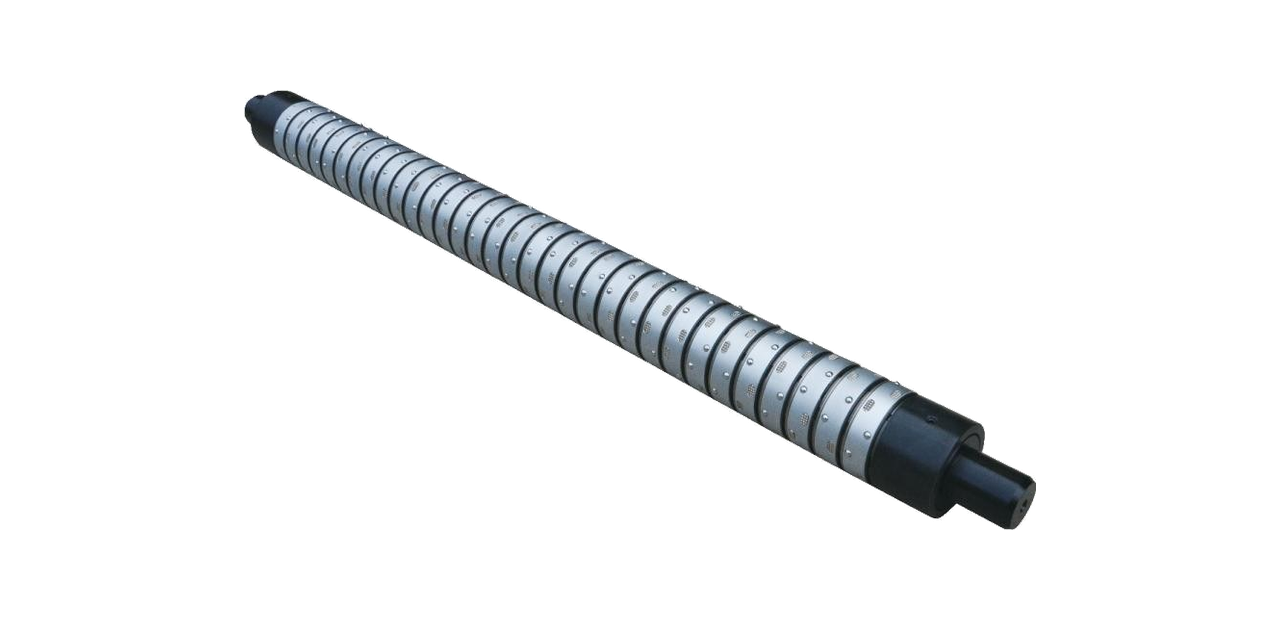
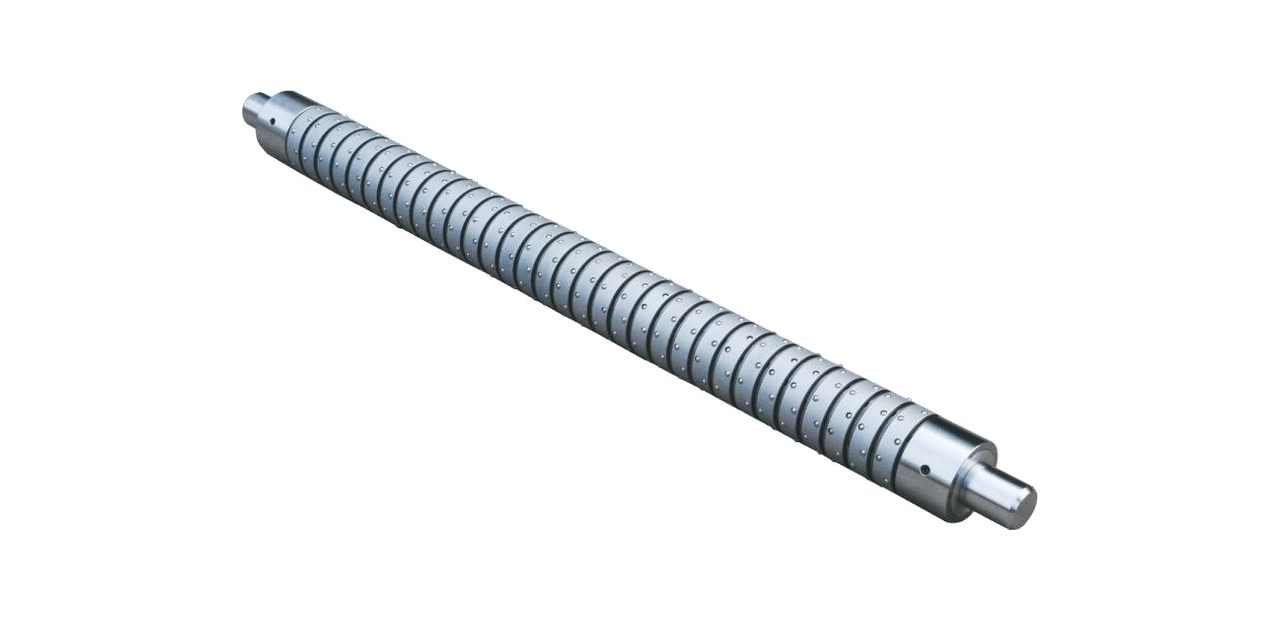
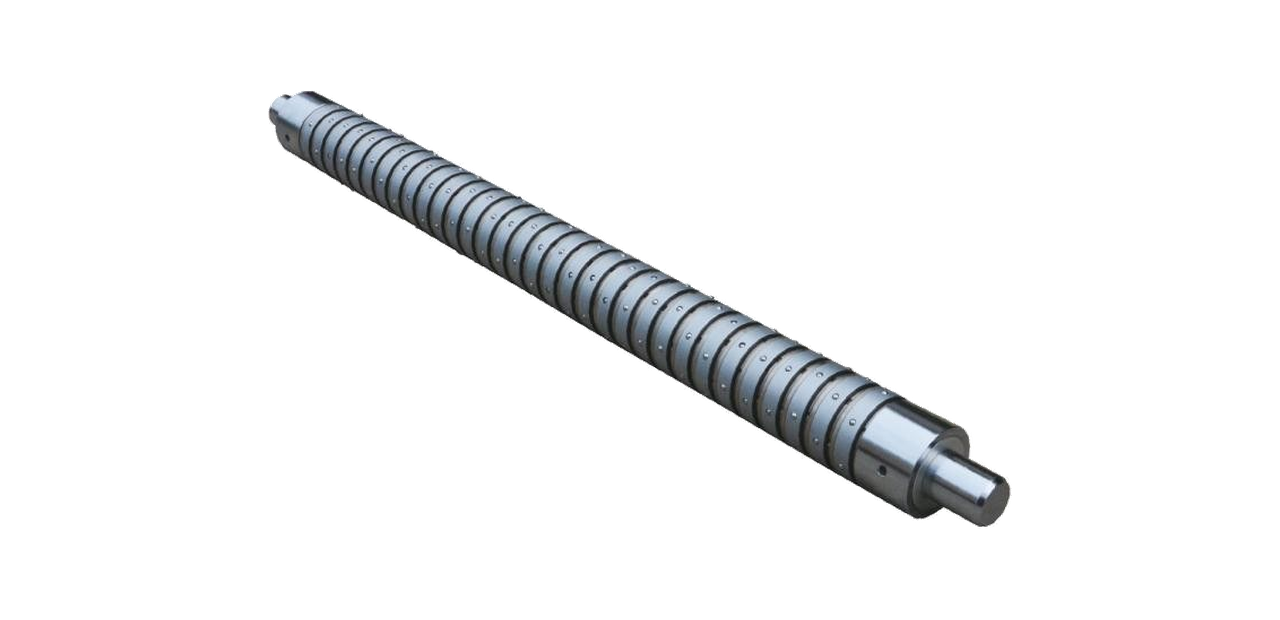
Ball-Type Winding Structure
Suitable for narrow-width slitting from 5 mm and for film, paper and label rewinding applications where roll-specific torque compensation is required.
| 3-inch Ring | 75.5 mm OD, 78.2 mm maximum expansion |
|---|---|
| 6-inch Ring | 151 mm OD, 155.5 mm maximum expansion |
| Core Sizes | 76.2 +/- 0.2 mm and 152.4 +/- 0.2 mm |
| Widths | Single-ball 10-25 mm; double-ball 15-50 mm |
| Minimum Slitting Width | From 5 mm depending on shaft and ring layout |
Slitting from 5 mm width upward, which is the narrowest of the six structures here.
Roll-specific torque compensation where many narrow rolls are wound across one shaft.
Can be built as center-air, pneumatic side-pressure or mechanical side-pressure, so it fits machines that cannot take a center-air shaft.
Single-ball rings 10–25 mm and double-ball rings 15–50 mm on 3-inch; 30–50 mm on 6-inch.
Slip Ring
Ball slip rings can be selected according to core size, ring width, ball structure, pressure method and required winding torque.
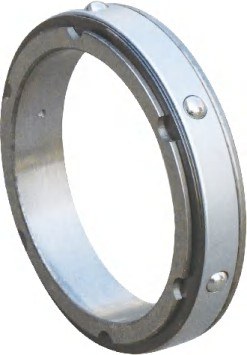
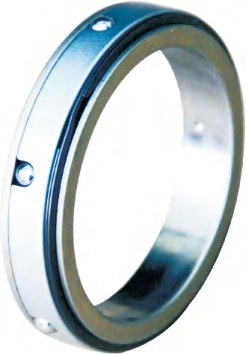
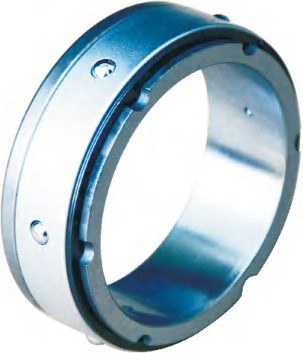
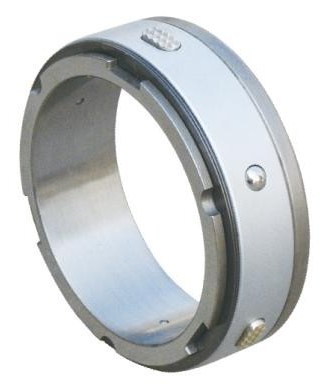
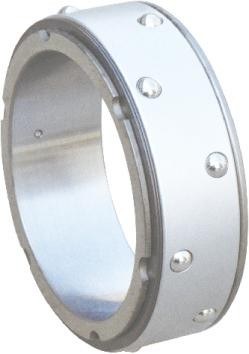
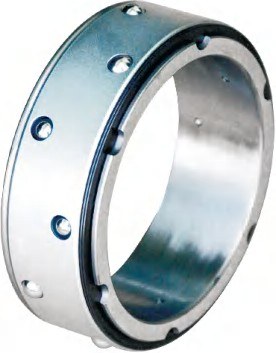
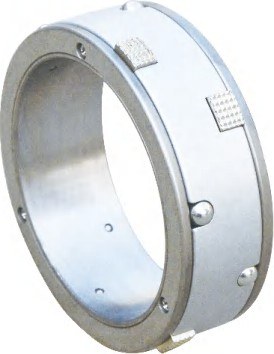
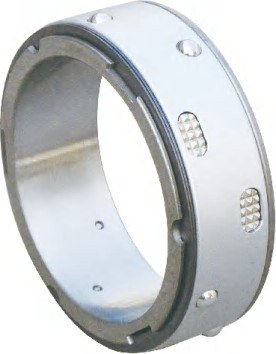
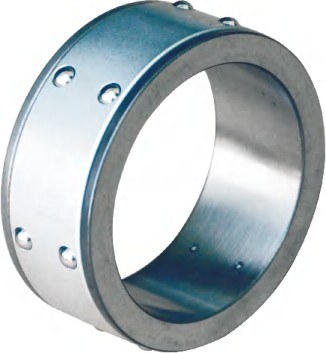
Start a ball-ring inquiry with the narrowest slit width and the number of rolls in the winding layout. Then identify single-ball or double-ball construction and the method used to apply pressure. The listed 5 mm minimum slitting width depends on the complete shaft and ring layout; it should not be read as a 5 mm replacement-ring width.
Replacement Slip Rings
Individual ball slip rings are available without purchasing a replacement shaft assembly. We can review rings for another maker’s shaft when the dimensions and pressure method are matched. Lead time is confirmed with the quotation once the ball arrangement and fit information are clear.
Tell us whether each ring is single-ball or double-ball and whether pressure is central air, pneumatic side pressure or mechanical side pressure. Measure the ring bore, listed here as 60 mm, and the actual width: 3-inch single-ball options span 10–25 mm and double-ball options span 15–50 mm. Give the core inner diameter, 76.2 mm for 3-inch or 152.4 mm for 6-inch, plus shaft keyslot or air-hole locations, quantity, and photographs of the removed ring beside its shaft.
You receive a ball slip ring configured in the confirmed single-ball or double-ball structure, with the agreed inner diameter, width and friction material. Core size and pressure method belong in that configuration; the ball-ring family name by itself does not define the replacement.
This shaft family is listed for slitting from 5 mm, but its ring widths are specified separately. Three-inch single-ball rings are offered in 10, 15, 20 and 25 mm widths, while the double-ball range extends from 15 to 50 mm. An inquiry therefore needs the finished slit width as well as the measured ring width. Keeping those measurements separate lets the replacement review follow the winding layout rather than infer a ring dimension from the narrowest product roll.
Center-air, pneumatic side-pressure and mechanical side-pressure versions are all described for the ball shaft. Confirm which arrangement is already on the machine before choosing from the dimensional list. Three-inch and six-inch cores also have different outside and expansion diameters, even though both belong to the same ball-ring family. The published force test uses a 3-inch double-ball ring with a 25 mm width and 60 mm inner diameter; its wool-felt groove condition is part of that test, not a specification for every single-ball or six-inch replacement.
Technical Reference Data
Ball force data below retain the individual test dimensions, materials and pressure conditions; compare those conditions with the ring you need.
Read the shared measurement and pressure guidance before applying these double-ball test readings.
Test condition: 3-inch double-ball slip ring, 25 mm width, 60 mm inner diameter, 20 x 3 groove with wool felt.
| Air Pressure (kg/cm2) | 0 | 0.2 | 0.4 | 0.6 | 0.8 | 1.0 | 1.2 | 1.4 | 1.6 | 1.8 | 2.0 | 2.2 | 2.4 | 2.6 | 2.8 | 3.0 |
|---|---|---|---|---|---|---|---|---|---|---|---|---|---|---|---|---|
| Pull Force (kg) | 0.17 | 0.21 | 0.41 | 0.52 | 0.79 | 1.00 | 1.12 | 1.38 | 1.54 | 1.77 | 1.87 | 1.99 | 2.08 | 2.14 | 2.24 | 2.46 |
Continuation of the 3-inch double-ball slip ring test.
| Air Pressure (kg/cm2) | 3.2 | 3.4 | 3.6 | 3.8 | 4.0 | 4.2 | 4.4 | 4.6 | 4.8 | 5.0 | 5.2 | 5.4 | 5.6 | 5.8 | 6.0 |
|---|---|---|---|---|---|---|---|---|---|---|---|---|---|---|---|
| Pull Force (kg) | 2.62 | 2.78 | 2.85 | 3.12 | 3.33 | 3.42 | 3.61 | 3.86 | 4.00 | 4.26 | 4.42 | 4.66 | 4.92 | 5.12 | 5.24 |
When the narrow-roll ball layout is being reconsidered for electrode, separator or battery foil work, review air rings with the stated 12- and 16-piston options.
View DetailsIf starting pressure dominates the ball-shaft inquiry, review the low-tension model’s explicit 0.1 kg/cm² specification and positioning-ball/bearing arrangement.
View DetailsFor medium-tension flexible-packaging laminates, DS is a separate pneumatic option; its 0.8 kg/cm² start must be acceptable before comparing ring dimensions.
View DetailsIf extended contact along the core is the deciding requirement, compare the cylindrical roller arrangement with the ball-contact structure shown here.
View DetailsWhere the core calls for rectangular contact rather than ball contact, compare metal and rubber key versions, especially for rubber or aluminum cores.
View DetailsHave a drawing of your shaft or a photo of the old rings? Send it on WhatsApp or to sales@kendoric.com — we check fit before quoting.